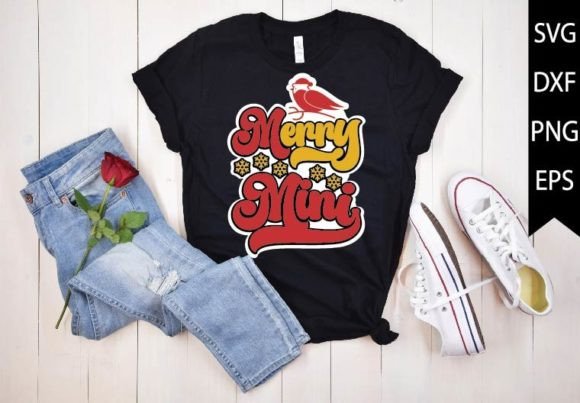
Merry Mini: A Designer's Review for Real Embroidery Projects
When I first opened the file for Merry Mini, my immediate thought wasn't about the festive cheer it promises, but rather how it would actually behave on a sewing machine. As someone who has spent years refining embroidery files and testing them on everything from stiff canvas to delicate baby onesies, I know that a pretty preview image often hides stitching nightmares. This Christmas Retro Svg design carries a specific nostalgia, evoking mid-century holiday cards with its bold lines and playful attitude. But does that personality survive the transition from screen to thread? In this review, I am putting Merry Mini through the wringer of real-world application to see if it belongs in your next client project or small business inventory.
The First Stitch: Visual Personality and Mood
The core strength of Merry Mini lies in its retro aesthetic. It isn't trying to be a generic snowflake or a standard Santa Claus; it has a distinct character that feels warm, slightly quirky, and undeniably cozy. For an embroidery designer, this is gold. The layout suggests a design that works best when given some breathing room, allowing the viewer to appreciate the "life begins after Christmas" sentiment without feeling rushed by clutter. The shape is compact yet expressive, making it ideal for projects where space is at a premium but impact is required. It creates a mood of relaxed celebration, perfect for the post-holiday season or as a subtle nod to the festivities during the busy December rush.
Visually, the design relies on clean lines and clear typography. This simplicity is deceptive because it requires precise execution. If the stitch density is too low, the retro feel will look unfinished. If it is too high, the fabric will pucker, ruining the crispness of the lettering. When you look at the file, you can tell it was crafted with the intention of being versatile, fitting seamlessly into various categories within Crafts and Graphics while maintaining a cohesive brand voice.
Real-World Scenarios: Where Merry Mini Shines
Let's talk about actual use cases. Imagine you are preparing a custom embroidered tote bag for a local craft fair. You need something that stands out on a shelf full of generic holiday items. Merry Mini fits this scenario perfectly. Its compact nature means it won't overwhelm the front pocket of a canvas tote, yet the retro font makes it a conversation starter. Customers often gravitate toward designs that feel personal and slightly irreverent, and this design delivers exactly that vibe.
Another strong contender for this design is baby apparel. There is a growing trend among parents to move away from traditional, overly sweet baby graphics in favor of witty, modern statements. An embroidered sweatshirt or a soft cotton onesie featuring Merry Mini could become a hit item for an Etsy seller. The phrase "life begins after Christmas" resonates deeply with new parents navigating the chaos of the holidays, adding an emotional layer to the physical product. The design's clarity ensures that even on a small garment like a baby hat or a pair of booties, the message remains legible and charming.
I also envision this working beautifully on kitchen towels or aprons for boutique owners. A chef or home baker wearing an apron with this design adds a touch of humor to their workspace. It transforms a functional item into a branded piece of merchandise. Whether you are creating a patch for a denim jacket or a decorative accent on a pillow cover, the versatility of Merry Mini allows it to adapt to different textures and styles without losing its identity.
Where to Proceed with Caution
While Merry Mini is robust, no single design is a universal solution. As an experienced reviewer, I must highlight areas where this file might struggle. Small hoop sizes present a challenge here. If you attempt to stitch this on a 4x4 inch area, the lettering might become too dense, leading to thread breaks or fabric distortion. Always verify the recommended hoop size before committing to a production run.
Fabric choice is equally critical. Textured fabrics, such as heavy bouclé or chunky knits, can swallow up the fine details of the retro style. Thin or stretchy fabrics, like lightweight jersey or silk, require extra care with stabilizers to prevent the design from warping. Dark fabrics pose another hurdle; unless you plan to use a high-density underlay or a contrasting background applique, the visibility of the design might be compromised. Furthermore, products that undergo frequent washing, like dish towels or workwear, demand a design with sufficient fill stitch coverage to withstand abrasion. If Merry Mini relies too heavily on thin running stitches, it may fray over time.
Impact on Product Value and Brand Consistency
In the world of handmade goods and commercial embroidery, the quality of the design directly influences customer trust. A well-executed Merry Mini on a finished product signals professionalism. It tells the buyer that attention to detail matters. Conversely, a poorly stitched version can make a boutique product look cheap, regardless of the price point. The retro theme of this design helps elevate the perceived value because it taps into a timeless aesthetic that feels curated rather than mass-produced.
For digital product sellers, the visual appeal of Merry Mini is crucial for generating sales. High-quality printable mockups showcasing this design on various surfaces—like a cozy sweater or a rustic wooden sign—can significantly boost engagement. Buyers want to visualize the end result, and a design with clear, confident lines makes that visualization easier. It enhances the giftability of the item, making it a thoughtful choice for holiday exchanges where a bit of humor is appreciated.
Practical Notes for the Embroidery Designer
Before you start stitching, there are several technical steps you must take to ensure success. First, always test the design on scrap fabric that matches your final material. This allows you to gauge the stitch density and adjust tension settings if necessary. Check the contrast between your chosen thread colors and the fabric; a light gray thread on a white shirt might disappear, while a dark thread on black fabric could lose definition.
Inspect the small details closely. Sometimes, what looks good on a screen can get lost in the texture of the thread. Ensure that the corners of the letters are sharp and that the curves flow smoothly. Using the proper stabilizer is non-negotiable; for this type of design, a cut-away stabilizer often provides the best support for long-term durability, especially on garments. If you are planning to sell finished items, confirm the licensing terms regarding commercial use. Some digital files restrict how many units you can produce or require attribution.
Finally, consider the context of your project. Is this a one-off personalized gift or part of a larger collection? Merry Mini works well as a standalone statement, but it can also serve as a complementary element in a larger holiday-themed series. By treating the design with respect and understanding its limitations, you can create a finished product that not only meets your standards but exceeds customer expectations.